
What is Fenugreek (Methi)? Nutritional and Healing Herb for Hair and Beyond

Written by Rayomand S Engineer
Reviewed by Dr. Ananthakrishnan Chandrasekhar, MD


Key Takeaways
- Introduction
- Understanding the Differences: Fenugreek Seeds vs Methi Leaves
- Key Benefits of Fenugreek Seeds and Methi Leaves
- Fenugreek Hair Benefits: Why Methi Is Called a Natural Hair Tonic
- Methi for Skin and Other Wellness Uses
- Are There Side Effects to Fenugreek or Methi?
- Tips for Buying, Storing & Using Fresh Methi and Fenugreek Seeds
- FAQs

Introduction
Have you ever seen your grandmother soak those little yellow seeds overnight and pound them into a paste to rub on her head, or put them in curries? In many Indian households, Fenugreek (methi) has long been cherished not only as a spice but also as a medicinal herb and a beauty enhancer.
From reduced hair loss to improved digestion, this crop offers numerous benefits. This blog explores the nutritional profile, traditional uses, and, in particular, the fenugreek hair benefits that have made it a timeless natural remedy.
Understanding the Differences: Fenugreek Seeds vs Methi Leaves
Methi fenugreek can either refer to the seeds or the fresh green leaves. Different parts of the plant have different culinary and medical uses.
- Fenugreek (methi) seeds:
Small, golden-brown kernels with a slightly bitter taste, commonly roasted or soaked before use. These seeds are used in spice blends, herbal remedies, and hair care routines.
- Fenugreek (methi) leaves:
Fresh green leaves are often cooked as a vegetable in Indian households. They are rich in fibre, vitamins, and minerals, offering unique nutritional benefits.
Both methi (fenugreek) seeds and leaves contain bioactive compounds, including Saponins, Flavonoids, and Alkaloids, which are powerful nutrients for overall health.
Key Benefits of Fenugreek Seeds and Methi Leaves
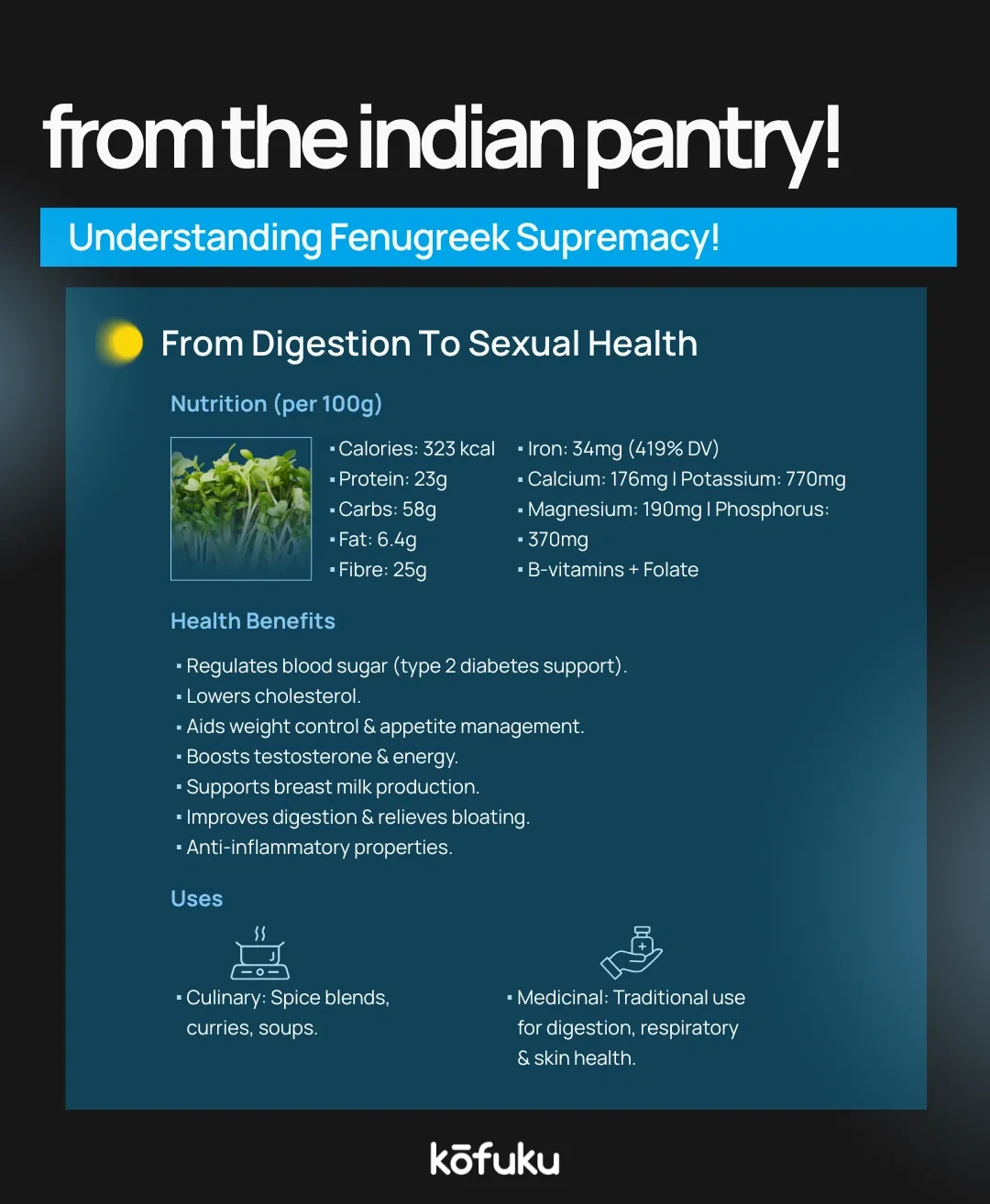
Fenugreek seeds are rich in protein, iron, and soluble fibre. They have been found to normalise the body's sugar level, enhance digestive functions, and control cholesterol levels.
On the other hand, methi fenugreek leaves are good sources of vitamin C, vitamin K, and folate, which boost the immune system and enhance the health of bones.
Together, they contribute to:
- Improved digestion: The high fibre content supports gut health.
- Hormonal balance: Compounds in fenugreek methi seeds may help manage menstrual discomfort and enhance lactation.
- Weight management: The fibre helps reduce appetite and cravings.
- Heart health: Regular intake supports cholesterol control.

Fenugreek Hair Benefits: Why Methi Is Called a Natural Hair Tonic
Fenugreek has been used for a long time by Indians for hair benefits. It is packed with protein, nicotinic acid, and lecithin that revitalise the roots of hair, prevent thinning, and improve shine.
How Does Fenugreek Improve Hair Strength and Prevent Hair Fall?
The advantage of fenugreek for hair is its nutritive quality. Fenugreek seeds contain proteins and amino acids that repair damaged hair and help reduce breakage. Lecithin content provides a moisturising effect to the scalp, minimising dryness that can cause hair fall.
Many people also use fenugreek seeds due to their ability to improve blood circulation in the scalp, improve follicle health, and preventing early hair loss. They apply soaked or sprouted seeds in masks, to harness the benefits of fenugreek seeds on hair.
Benefits of Fenugreek for Dandruff, Shine, and Hair Growth
- Anti-dandruff action: The antifungal properties of fenugreek (methi) combat scalp infections and flaking.
- Shiny hair: Oils and pastes made from fenugreek are used to smooth and glossy strands.
- Hair growth: Regular application of fenugreek for hair masks encourages new growth by providing protein and strengthening roots.
How to Use Fenugreek Seeds for Hair: Oils, Pastes, Rinses
There are multiple ways to reap the benefits of fenugreek for hair:
- Fenugreek oil infusion: Soak methi fenugreek seeds in coconut or olive oil for a week. Strain and massage into the scalp.
- Seed paste: Grind soaked fenugreek seeds, methi seeds, into a paste and apply directly to the scalp for 30 minutes before rinsing.
- Hair rinse: Boil fenugreek (methi) seeds in water, cool it, and use the strained liquid as a final rinse to add shine.
Methi for Skin and Other Wellness Uses
In addition to hair, methi leaves and seeds are also beneficial for the skin. The antioxidants decrease inflammatory processes, which assist in acne treatment and relieve irritation. Seed paste made packs can help soothe and soften dull skin.
Other uses include:
- Digestive aid: Soaked seeds reduce acidity and bloating.
- Blood sugar control: Widely studied for supporting diabetic management.
- Women’s health: Can provide relief from PMS and boost lactation in nursing mothers.
- Anti-ageing: Fenugreek (methi) leaves contain compounds that combat oxidative stress.
Therefore, directly or indirectly, methi fenugreek can provide comprehensive health support, in addition to its aesthetic uses.

Are There Side Effects to Fenugreek or Methi?
Although there are many benefits of fenugreek seeds to hair and health, excessive use can lead to side effects. Some people develop indigestion or allergies. Taking large quantities can also depress blood sugar level, particularly in those taking medications to treat diabetes.
Herbal hair care, treated with topical fenugreek, has been shown to be generally safe; however, it must be patch-tested to avoid irritating the scalp.
Tips for Buying, Storing & Using Fresh Methi and Fenugreek Seeds
To enjoy the advantages of fenugreek seeds for hair and wellness, quality matters.
- Buying: Choose organic fenugreek seeds and methi that are uniform in color, and fresh green fenugreek leaves that are free from wilting.
- Storing: Keep seeds in an airtight container in a cool, dry place. Store leaves in the refrigerator wrapped in paper or cloth to retain freshness.
- Using: Roast seeds lightly before culinary use to reduce bitterness. For hair and skin care, soak overnight to release active compounds.
Combining methi (fenugreek) seeds and leaves into your everyday life promises numerous benefits, including cosmetic and nutritional advantages.
FAQ
The best ways include soaking fenugreek seeds (methi) overnight, and grinding into a paste, mixing with coconut oil for scalp massage, or using the water as a rinse. These methods help strengthen roots, reduce shedding, and stimulate healthy growth.
Methi fenugreek seeds nourish the scalp with protein and iron, strengthen hair follicles, and regulate excess oil production. Their natural antifungal properties combat dandruff while enhancing shine, promoting growth, and maintaining overall scalp health when used consistently in masks, oils, or rinses.
For most, fenugreek for hair is safe, but possible side effects include mild scalp irritation, dryness, or an unusual smell. Rare allergic reactions may occur. Always perform a patch test before using fenugreek pastes, oils, or rinses extensively.
Soak fenugreek seeds for hair overnight, grind into a smooth paste, and mix with yoghurt or aloe vera gel. Apply generously to the scalp and strands, leave for 30 minutes, then rinse thoroughly. This nourishes roots, prevents breakage, and boosts shine.
Fenugreek seeds' benefits for hair include reducing hair fall by strengthening follicles and improving scalp health. While they cannot cure genetic baldness, consistent use of fenugreek packs or oils can help minimize shedding, support hair thickness, and slow down early hair loss.
Fenugreek seeds, also known as methi, primarily target scalp health, hair fall, and regrowth, while fenugreek methi leaves are used more for shine, softness, and conditioning. Both have nutrients that benefit hair, but seeds are stronger for root nourishment and anti-hair fall care.
Yes, fenugreek hair benefits include its antifungal and antibacterial properties, which help fight dandruff naturally. Using soaked fenugreek seed paste or a rinse soothes scalp irritation, reduces flaking, and balances oil production, making it a practical, chemical-free remedy for dandruff.
Topical fenugreek use for pregnant women is generally safe, but oral consumption may trigger uterine contractions. Always consult a doctor before use, and perform a patch test to avoid adverse reactions.
To maximise fenugreek for hair benefits, apply seed pastes, oils, or rinses once or twice a week. Excessive use may cause dryness. Regular weekly application helps strengthen hair, supports growth, and maintains scalp balance naturally over time.
Here's what people are reading

Your guide to allergy medications: tablets, creams, and remedies

Why smoking a cigarette before or after your workout can harm your gains

Why jackfruit is good for you: nutrition, benefits, and how to enjoy raw and cooked jackfruit

Why are there epithelial cells in my urine? meaning & causes

What to know about hiv wasting syndrome